 Words by
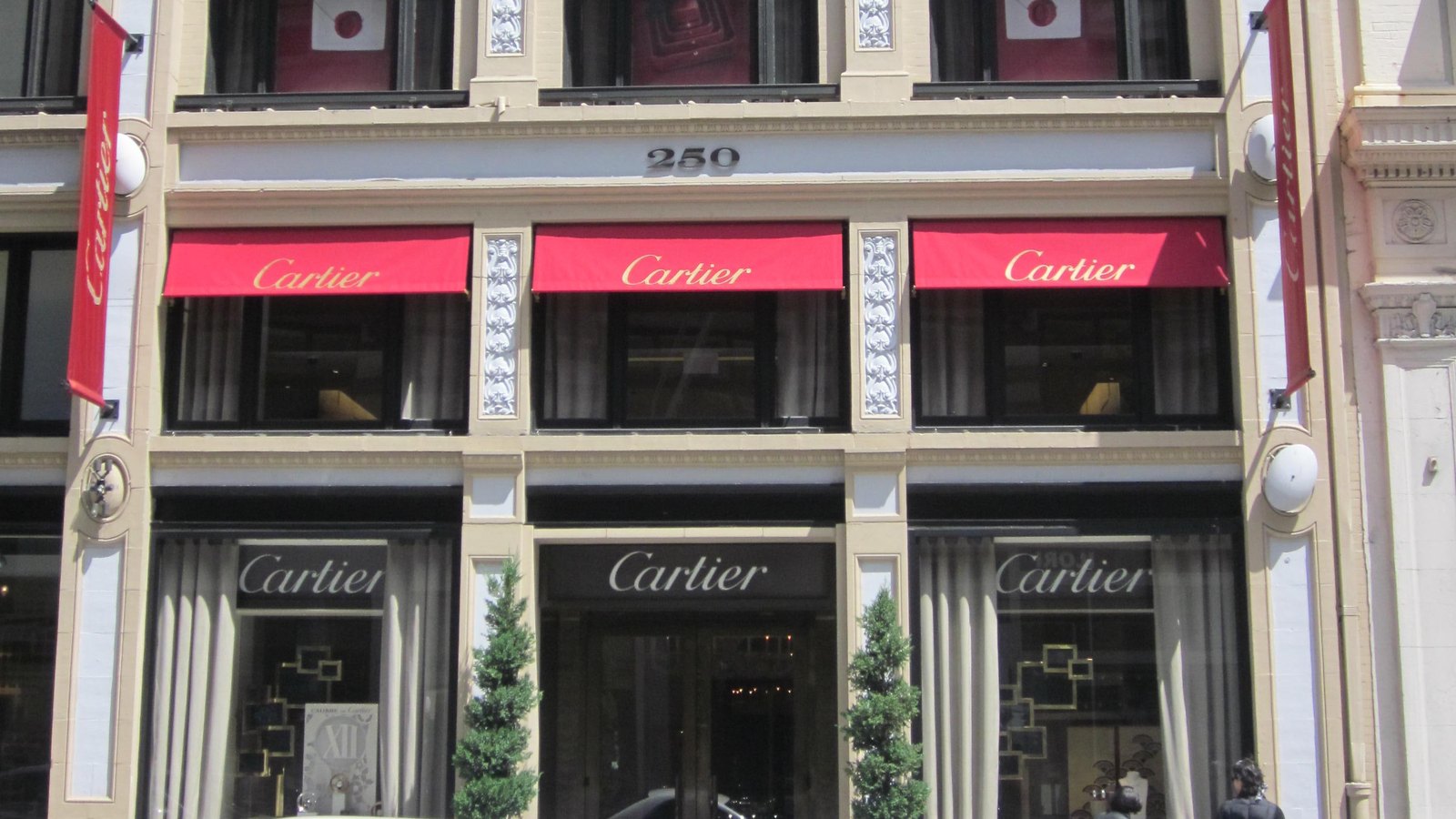
Cartier and Van Cleef & Arpels are carrying Richemont. The Swiss luxury group’s four jewelry houses sold €9.15 billion worth of rings, bracelets and watches in the six months to Sept. 30, up 18%, and they now account for roughly three of every four euros the company takes in.
Richemont reported its first-half results on Nov. 13. Group sales rose 16% to €12.28 billion, or 17% at constant exchange rates, and profit for the period climbed 39% to €2.5 billion. It is a sharp contrast with the slower recovery at the biggest name in luxury, which we covered in our look at LVMH’s nine-month revenue.
The jewelry engine
The Jewellery Maisons segment, which groups Cartier, Van Cleef & Arpels, Buccellati and Vhernier, grew sales 19% at constant rates. Growth slowed to 14% in the second quarter, but that was measured against a 17% jump a year earlier. Its operating result reached €3.23 billion, up from €2.54 billion, for a 35.3% margin.
The company credited its long-running lines rather than one hit product. It named Cartier’s Clash, Love and Panthère, Van Cleef & Arpels’ Alhambra, Perlée and Fauna, and Buccellati’s Opera Tulle and Etoilée. Cartier added a new Roadster watch edition and Love Color jewelry pieces, and Van Cleef & Arpels added pink enamel to Alhambra in September, according to the interim report.
Every jewelry house and every region grew by double digits except the Middle East and Africa, which Richemont said is still affected by the conflict there. Raw material costs stayed high, and the group said its jewelers kept a “disciplined approach to pricing.”
The houses also kept opening stores. Cartier opened boutiques in Orlando and Austin, Van Cleef & Arpels in Madrid, and Buccellati in Bangkok and Guangzhou. Vhernier, the Italian jeweler that joined the group two years ago, opened its first stores in China and a boutique on London’s Old Bond Street.
Watches recover, slowly
The Specialist Watchmakers, a group that includes Vacheron Constantin, Jaeger-LeCoultre and A. Lange & Söhne, sold €1.71 billion, up 10% at constant rates. Their operating profit tripled to €150 million, but the margin was still only 8.8%. Sales in Asia Pacific were flat amid soft demand in China, while the Americas and Japan led the gains.
Chairman Johann Rupert struck a cautious note in his commentary on the results. “Although recovery is unlikely to be linear in an environment that continues to be challenging for the industry, I am pleased to see our Specialist Watchmakers delivering growth for over a year now,” he wrote.
The “Other” segment, which holds the fashion and accessories houses, grew 9%, led by Alaïa and the American golf and sportswear label Peter Millar, with better momentum at Montblanc. It still posted a €12 million operating loss.
What the margin hides
Group operating profit rose 33% to €3.1 billion, a 25.5% margin. That figure includes €229 million of one-time gains related to tariffs. Without them, operating profit was €2.9 billion and the margin 23.6%, still 1.4 points better than a year earlier.
Customers are also buying more directly from the brands. Retail and online sales made up 78% of the total, two points more than a year ago. Richemont ended September with €7.7 billion in net cash, helped by €2.5 billion of operating cash flow and €0.4 billion from selling its stake in Avolta, the travel retailer.
The holiday quarter is the next test. Richemont typically reports its October-December sales in mid-January. For more on how the big houses got here, see our histories of Tiffany’s sale to LVMH and Hermès, and the rest of our Business coverage.
Add Amore Magazine as a preferred source on Google (opens in a new tab)