 Words by
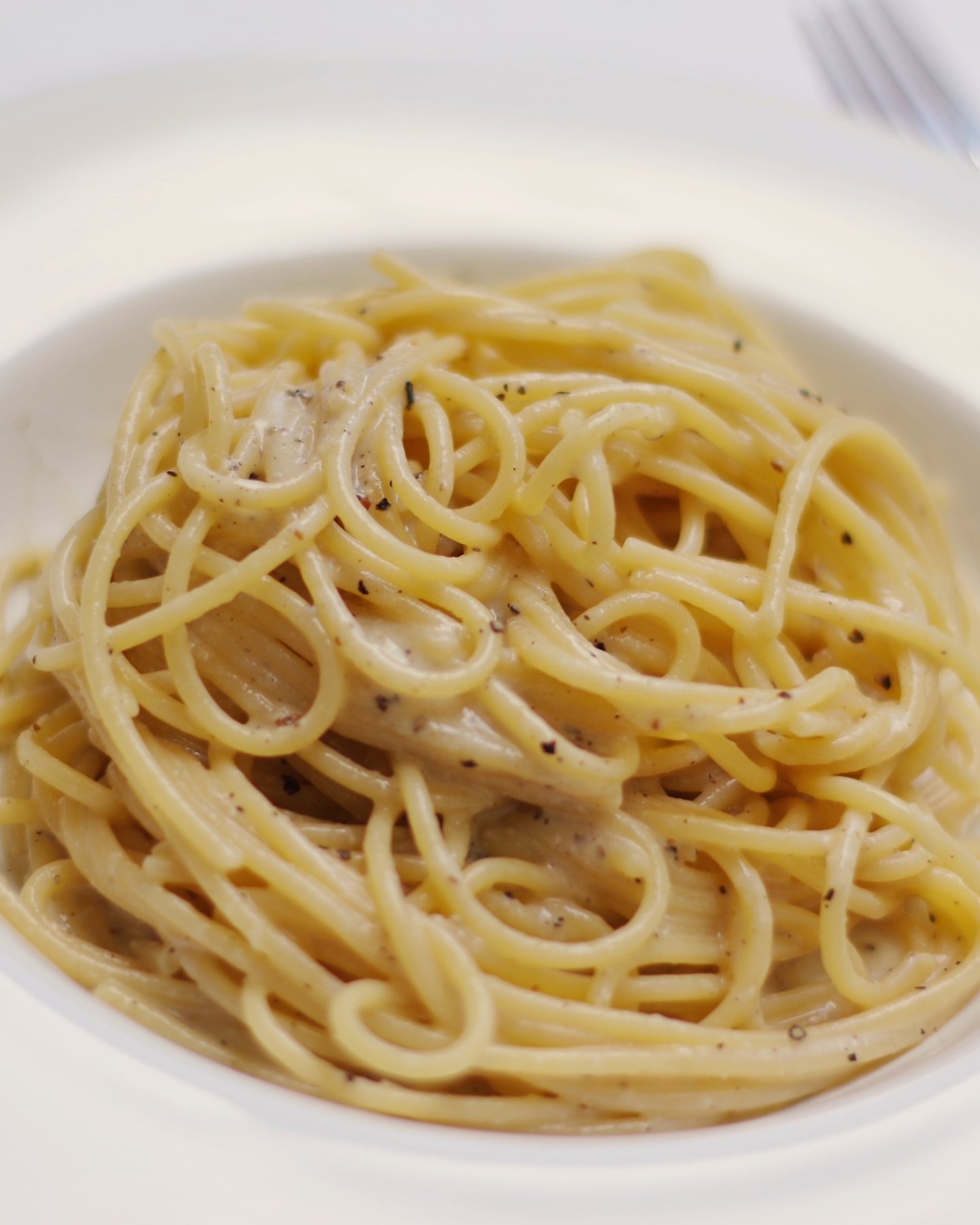
Cacio e pepe means “cheese and pepper” in Roman dialect, and that is nearly all there is to it. The dish combines pasta, finely grated Pecorino Romano, freshly cracked black pepper and the starchy water the pasta cooks in. Done well, it is creamy, sharp and peppery, with a sauce that clings to every strand. Done badly, it is a plate of noodles sitting in clumps of melted cheese.
Few dishes demand so little shopping and so much attention.
Where it comes from
Cacio e pepe belongs to the family of Roman pastas built on Pecorino Romano, the hard, salty sheep’s-milk cheese made in Lazio and on Sardinia. Its relatives include gricia, which adds cured pork jowl called guanciale; carbonara, which adds guanciale and egg; and amatriciana, which adds guanciale and tomato.
The dish is often linked to the shepherds of the Roman countryside, who could carry aged cheese, dried pasta and peppercorns for long periods without spoiling. Whatever its exact origins, it has been a fixture of Roman trattorias for generations and is now served around the world.
The three ingredients
Pasta. Romans traditionally use tonnarelli, a square-edged fresh egg pasta similar to spaghetti alla chitarra, or dried spaghetti. Bronze-die dried pasta has a rougher surface that helps the sauce cling.
Cheese. Pecorino Romano is essential. It must be finely grated, ideally on a rasp-style grater, so it melts quickly. Some cooks blend in a little Parmigiano-Reggiano to soften the saltiness and help the sauce stay smooth, though purists object.
Pepper. Use whole black peppercorns, coarsely cracked just before cooking. Toasting them briefly in a dry pan brings out their aroma.
Why the sauce breaks
The sauce is an emulsion of fat from the cheese and water, held together by the starch released by the pasta. If the cheese gets too hot, its proteins tighten and squeeze out fat, forming stringy clumps. If there isn’t enough starch, the sauce won’t hold.
The two keys are temperature and starch. The cheese should meet liquid that is hot but not boiling, and the pasta water should be cloudy with starch.
A reliable method
For two servings:
- 200 grams (about 7 ounces) spaghetti or tonnarelli
- 80 to 100 grams (about 3 to 3.5 ounces) Pecorino Romano, very finely grated
- 1 to 2 teaspoons whole black peppercorns
- Salt for the pasta water
1. Bring a smaller-than-usual pot of water to a boil and salt it lightly. Pecorino is salty, and less water means starchier water.
2. Toast the cracked pepper in a wide skillet over medium heat for about a minute, then add a ladle of pasta water and let it simmer.
3. In a bowl, mix the cheese with a few tablespoons of warm (not boiling) pasta water to form a thick, smooth paste.
4. Cook the pasta until it is a minute or two short of al dente, then move it to the skillet with the pepper and a splash more water. Toss to finish cooking.
5. Take the skillet off the heat and let it cool for 30 seconds. Add the cheese paste and toss vigorously, adding pasta water a spoonful at a time until the sauce is glossy and creamy.
6. Serve immediately on warm plates, with extra pepper and cheese.
Common mistakes
- Using pre-grated cheese. It often contains anti-caking agents that prevent smooth melting.
- Adding cheese over high heat. This is the fastest way to clumps.
- Draining the pasta. You need that starchy water. Transfer pasta directly with tongs.
- Waiting. Cacio e pepe thickens as it cools. Eat it right away.
Where to try it in Rome
Many Roman trattorias offer cacio e pepe as a staple, and it is worth ordering at a traditional spot to taste the benchmark. Some restaurants finish it tableside in a hollowed wheel of cheese, a showy variation. But the best versions are often the simplest, served in a small trattoria with a carafe of house wine.
Making it at home takes practice. Expect a few imperfect batches before your sauce turns out silky every time. For more recipes and food stories, visit our Food section.